The chainsaw, a powerful tool for cutting and trimming trees, can be a valuable addition to your forestry or gardening arsenal. However, with numerous models and options on the market, choosing the right chainsaw can be a daunting task. This guide aims to demystify the process and help you make an informed purchase.
The Basics of Chainsaws
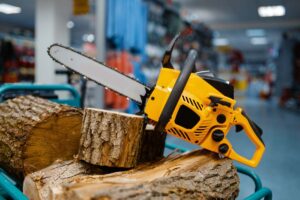
A chainsaw, at its most basic, is a mechanical saw with a set of teeth attached to a rotating chain running along a guide bar. It’s used in activities such as tree felling, limbing, pruning, and cutting firewood.
Types of Chainsaws
Chainsaws come in three main types: Gas-Powered, Electric, and Battery-Powered.
Gas-Powered Chainsaws are the most powerful and are ideal for heavy-duty tasks. They offer mobility but are louder, heavier, and require more maintenance.
Electric Chainsaws are quieter, lighter, and easier to handle. They’re perfect for light to medium tasks but require a power source, limiting mobility.
Battery-Powered Chainsaws offer the best of both worlds, providing mobility without the noise and maintenance of gas-powered chainsaws. However, their run time is limited.
Factors to Consider When Buying a Chainsaw
Chainsaw Power and Size
The power of a gas chainsaw is defined by its engine size (cubic centimeters or cc), while for electric and battery chainsaws, it’s by amperage and voltage, respectively.
The length of the chainsaw bar, which guides the chain, determines the size of the material the chainsaw can cut in a single pass.
Purpose/Usage
Identifying your needs will guide your choice. For light tasks like trimming and pruning, a small, less powerful chainsaw will suffice. For felling small trees or cutting firewood, a medium-duty chainsaw is ideal. For heavy-duty tasks like felling large trees or professional forestry work, you’ll need a large, powerful chainsaw.
Safety Features
Chainsaws are powerful tools, and safety should be a top priority. Look for safety features such as a chain brake to stop the chain in case of kickback, anti-vibration features to reduce fatigue, and a safety throttle to prevent accidental acceleration.
Ergonomics and Ease of Use
The weight and balance of the chainsaw affect its handling and your fatigue levels. Also, consider the comfort and design of the handle and any easy-start features.
Maintenance and Care
A tool-free chain tensioning system makes it easy to adjust the chain tension. Regular maintenance ensures a longer lifespan for your chainsaw, so consider the ease of maintenance and the availability of spare parts.
Making the Right Choice with Forest Pro
At Forest Pro, we understand that choosing the right chainsaw can be complex. Our team is on hand to guide you through the process, ensuring you find a chainsaw that meets your specific needs.
Conclusion
Choosing the right chainsaw is about understanding your needs, the capabilities of different chainsaw types, and the features that make using and maintaining the chainsaw easier and safer. Reach out to Forest Pro for personalized advice and a wide range of chainsaw options to fit your needs.